1. Bonaparte
I called three Nic Esposito’s and he was the only one who answered. I took that as meaningful. We didn’t talk on the phone long, just enough for him to say, “Yes, I am. Who is this?” and I told him, and there was a series of pauses and half-words which the telephone cut up, so we hung up. But I think it’s him.
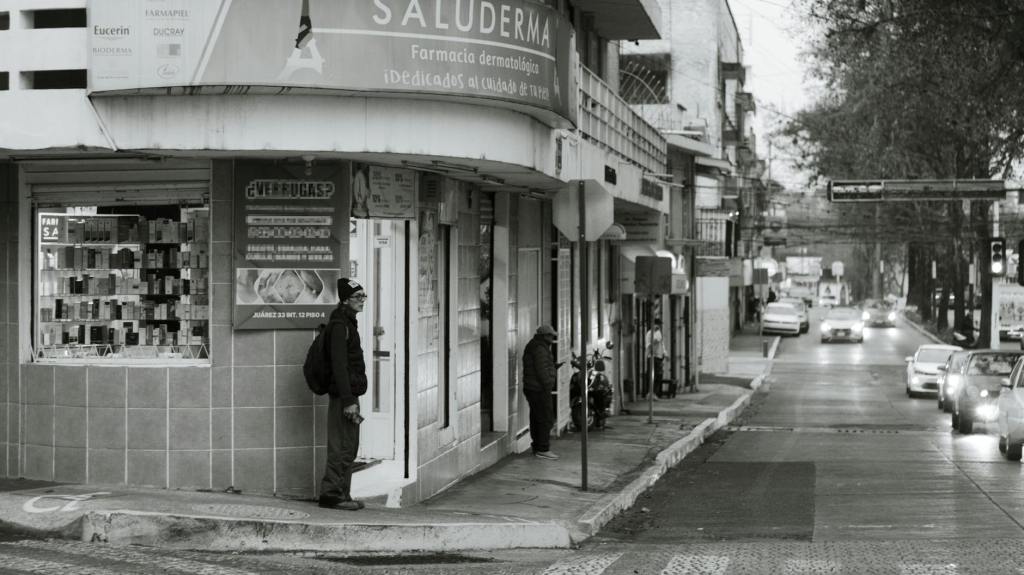
I wrote down the address from the phone book and am walking that way down Bonaparte Avenue. I’m going to meet this Nic Esposito who lives by the river on Magazine Street. It’s a far walk and dark already but pleasant and warm. It’s no longer raining. A slow mist rises from the ground and off the thick trees and the traffic lights, it pushes the reek of rot back to the bayou, it rouses the city from its quiet sweat; I feel awake. It will be a good night. I’m going to see an old friend.
# # #
The last image I have of him is in the back of a watermelon truck. Bolivia. A muddy road. A green canyon collapses to our left. Little waterfalls fall startled from the right, out of high creeks and purple rock, onto the road and away again unseen. Nic had a big beard. I must have had one too, not as big. There were roosters in the truck. There were baskets of plantains. There were the sweet little bananas I can’t remember the name of; we ate many of them, we threw the spotted peels over the side and off the mountain. We cracked open a watermelon: a rapturous thick, wet snap. Its candy-coated pulp gave off a gory rosy light.
We sat cross-legged and scooped the heavy halves with our hands. Between scoops we looked at the sky. It had stopped raining, but not for long. The truck pushed forward and its sides swayed on its springs like a boat between swells, scraping the pockmarked road. We didn’t know where it was going. We would go as far as it would take us. The watermelon shone and Nic and I noticed it but didn’t say anything. There was nothing to say. Everything shone. Instead we looked at the sky; stratous, lowering, it floated east in greasy folds like a snake’s belly. That was the last time.
# # #
Bonaparte Avenue isn’t the quickest way to Magazine, but I want to walk past the old house. Is it still there? The sidewalks are still slate and narrow as when the two of us walked here years ago, hips bumping. The same live oaks vault heavily overhead. It’s a quiet boulevard and pointlessly wide, the median is overgrown with wild grass, and on either side the hiss of cars on the wet pavement is musical. I hear it, I breathe through my nose, I pop my ears. I approach where the house stood.
That house, the house we moved into after the hurricane, was a lean and tired mansion. It left you with the impression of green but was not. Long lacquer curls came off the side and hung there like criminals. A porch struggled to free itself from the foundation. The old glass panes dripped slow to the sills, and on the roof there was a turret that we didn’t know how to get up into. Cats roamed, and said, it was once a fine house.
Nic and I had glimpsed each other around New Orleans before meeting there; in bars uptown, the lower ninth, Frenchman. Or at re-supplies at Camp Hope. We were both gutting homes, fixing roofs, making plans and changing them. We tramped. So did everyone. That first night on Bonaparte I was brought there to the old mansion for a farewell party. I came with a person I can’t remember. A volunteer. Canadian, I think. There were a lot of Canadians there in a commotion of some sort. They were all leaving town I guess, all fake-drunk and afraid of losing something, of leaving something or someone or some feeling behind. It was a cliquey party and I knew no one. I went outside and saw him.
On the porch the two of us drank and got stoned. It was hot; the June bugs came early and the porch was sweating and so were we. The water in the air and on our breath doused the little blunt; with slow movements we would re-light it. There was a black and white cat on Nic’s lap; we didn’t know its name. An orange cat with three legs sprawled contentedly on the banister. The orange cat’s name was Danzig; it had been thrown out of a second floor bathroom window, Nic said, because it attacked penises. Hides in the sink and springs on them undrawn. Eventually met the wrong man.
Besides those cats we were alone. The commotion inside soon dwindled, then vanished, the voices skipping out of doors and down steps and away. They took many things with them. The night creaked forward and it was good.
In a little while neither of us could remember whose house this was or where anybody else was and I believe that was the point of our first conversation. It was important that neither of us knew anything, because then we were no longer strangers, and the summer could begin. That was the summer after the storm, when everything was new, everything that happened was like a polaroid still developing, the blank being waved slowly over damp upper-lips and eye-lids. It was nice to think that everything had been wiped clean. Except that everywhere was so dirty.
“It’s weird, how everyone just disappeared,” Nic said. He rhymed deliberately, pausing on words here and there like he invented them. His was a musical language, coarse but clear-cut, eluding origins, evoking many.
“Yeah,” I said. “Guess the storm blew them all over everywhere but here.”
“No, man, I’m talkin’ about this place. This house. Where is everybody?” he asked. “I came here with somebody. I know I did.”
I finished a beer. Opened another, handed one to Nic. We were drinking a box of twelve beers which I brought as a gift but not really.
“Who’s feeding these cats?” He asked. “That one’s only got three legs.” Danzig smiled with his eyes closed.
“I think they came from Canada, now they’re going back to Canada.”
“The cats?” said Nic.
“No. Whoever was squatting here. Volunteers.”
Nic was silent. We contemplated hardly anything. I put my feet on the railing. Some time later he looked at me and seemed to have made a kind of decision. “Do you want the big bed?” he asked. His voice was high and flat. The half moon rose.
A couple of Canadians came back to get something before leaving for good. They didn’t look at us. They didn’t see us, perhaps. When they left we were alone again and happy and hungry. We took the three-legged cat into the house, we stumbled through the tall hallways, we found a can of cranberry sauce in the fridge. We scooped from the can while the cat purred. There was the smell of coffee and of roach killer.
We explored the old mansion. In the living room there were two life-size suits of armor, phony, relics of a Mardi Gras float. They stood exhausted on either side of a high-backed wooden chair. It was rueful; it was a thrift-store throne. A prior squatter had carved the words “Who ‘dat?” into the wood. Initials and dates were etched below, all recent: September hearts, February fleurs-de-lis, acronyms and poems on into our May. We regarded the chair stoically. They might have been cave drawings.
Nic said he was smart but talks dumb to people he doesn’t know. That’s what he said, and later I believed him. I gave him the big bed.
There are ways that men get to know each other which are never spoken, which come not by sharing histories but by treading quietly through something new. This was how Nic and I became housemates, became friends, and something else after that, I don’t know what, never have known it twice to name it. We didn’t see each other much. But for a while there on Bonaparte we were something like ghouls: gruesome, glad, shackled at the wrists. We were unable to tell true from temporary, not caring, or not wanting to find out. We were both here for something besides the roofs. We didn’t ask questions about what came before. We could stand each other and that was enough.
We sweat so much in those days, all the northerners sweat, and we got to know each other’s scent. I could smell him from his room. When he brought girls home I could smell him. When I brought girls home I could smell him. It wasn’t a bad smell, not a stink or pinch; it was Nic, it was a part of him, and it worked its way over nightly, through the crooked walls and high halls, it mettled in our lovers’ hair and watched while we cheated on each other.
For that summer and fall we lived together on Bonaparte Avenue and fed the cats and fixed roofs that had been torn or swept away by the hurricane. When all the roofs were fixed or forgotten and the cats disappeared we decided that we were friends and that we might do something together.
2. Something
Outside the new capitol of Santa Cruz, Nic and I arrived at a bar called Casanegra. In the corner was the man who, over a series of ambiguous e-mails, had promised us room and board. He was a local farmer with a slice of bad land on a fast river. His name was Cristobal, and we had arranged to meet here. Cristobal’s farm was a slow-road’s way outside of Sucre, the old capitol, off a switchback descent through a low, lush forest. He was known around the area for having left for a number of years, for his fair skin, his European cheeks, for the gringos he housed now and then, and for his farm that made no money. People didn’t trust him, and no one said anything. Tonight he played guitar in the corner to the quiet guests of Casanegra. There were no guests; there was just me and Nic, and the black-eyed bartender, and a toothless Quechua woman knitting children’s clothes in the corner. We listened to Cristobal play and wondered what made us decide to come to Bolivia. He played Led Zeppelin songs with the words changed to Spanish or Quechua or Aymara, words we knew not in languages we never heard of. Nic and I stayed close to each other and had secret thoughts about our bank accounts, about going elsewhere; or going home, wherever that was; but we didn’t go home. We went to Cristobal’s farm and turned over the fields and swam in the river every day at noon and we got used to it.
There is a cow there, Laura, who might still be alive. Each morning the sun got up at dawn and we did too. Milk Laura. Feed Laura. First, find Laura.
“Low—Ra! . . . Low—Ra!”
We yelled proudly and pointlessly into her forest pasture. The air was thick and sleepy, we’d watch it rise off the wet limbs to snatch our voices out of the leaves. Sometimes we spoke and it was as though we never spoke, the palm of pre-dawn cupping our lips. We learned not to say a lot. We didn’t know what to say anyways.
A few feet beyond Laura’s fence there was a natural berm that rose above our heads and concealed the green void where Laura lived. Quixotic trees limped up the slope and, seeing the other side, hesitated. Their poses frightened us. What did they see? Laura never came but we yelled with deep faith. We didn’t want to go in there. Bats and jaguars and ancient lizards lived there with Laura and we were afraid. We were afraid of the limbs on the trees, which looked like they had experienced artillery. We were afraid of God and we were afraid of being snapped and crushed in the middle of nowhere. We took turns going in.
Once when it was Nic’s turn he was nearly snapped at the top of the berm, but because he had no roots he was not. He didn’t reach “—Ra” when Laura exploded out of her void like a huge cat. Nic was hit hard and flowed face-first down the slope like a bean-doll. When he reached the bottom Laura was ear-deep in her breakfast bucket. Nic looked up with mud in his teeth but teeth in his mouth and smiled. We learned to have deeper faith after that, and to hide behind tree trunks.
I remember a lot of things about that place, on good days. I remember the dying dogs, the dirty bottles of Coca-Cola, the soft, swift river. But most of all I remember Nic and I remember the nights. The jungle was black and claustrophobic and settled on our shoulders; it was hot like Louisiana but the smell was different, not the rot of swamp, but of fickle death passing overhead, lumbering, a heavy thing above the canopy: it was the smell of burned crops, cow-shit and trash-heaps; the stench of cheap labor and fast lives and callouses; the aroma of cassava and rum and coca leaves; the scent of a forest on fire upwind, creeping, billowing casually closer, never arriving.
Nic and I stayed in a hut along the river a quarter mile from Cristobal’s demented family. Each night we left his heavily lacquered dinner table for the homely hut, and the dark was so dark, so complete, that our eyes grew wide and gave up. But our limbs memorized the path for us, and the moment we wondered where we were, we would arrive. In the hut we talked about convenience stores, we carved avocado pits, we hosted the occasional German or Israeli itinerant. Most nights we lay on our separate mats listening to the river. Most nights we picked ticks and other bugs out of our body parts.
One night Nic carved the image of Abraham Lincoln into an avocado pit. I was reading an ink-bled paperback, a former farmhand’s, when he threw the avocado pit at my head. I picked it up. On the back I glimpsed a tiny, hasty pair of initials I didn’t recognize. Before I could ask, he asked me, “Do you think they know about Abe Lincoln?” The night had grown cool. I reached for my wool blanket.
“Cristobal?” I said. “You’ve seen what he pays those old gauchos. Not all men are created equal.”
“At least he pays them,” he said. “We’re doing the same stuff for nothing.” A gust patted the eaves of the little shack.
“You want two dollars a day?” I asked.
“No. I’d rather do it for nothing.” He looked through the splintered gaps in the wall and became quiet. “I like pretending I’m an old gaucho.”
“He pays the gauchos.”
“I like pretending I’m a P.O.W.”
“We can leave whenever we want.” I said. We had been there two months.
“I know,” he said, and turned away. The air reached down to hush us.
Every night Nic drifted deeper into some space I couldn’t see. Some nights he floated back, just enough for me to grab him. This night he had a strong suspicion that there was an insect latched on his balls. He couldn’t see it. In the candlelight I removed it. It was not a weird thing to do. We laughed, we were each glad it was just a tick. We didn’t worry over ticks like the niguas. Niguas were those tiny black non-entities who burrowed into our hands and feet while we were in the fields, who swelled up to entities and whispered pea-sized secrets to our nerve-endings, causing great consideration; it was satisfying to dig them out with a mesquite thorn.
Something about the event made him garrulous. From his bed he spoke.
“Hey.”
“. . . What.”
“We made a mistake, man,” he said.
“What?”
He was silent. Tree frogs croaked.
“I have a kid. Did I ever tell you?” Nic continued. From the river we heard a piece of driftwood unlodge and thump against black boulders.
“Let’s get out of here,” Nic said.
“What are you talking about?”
“Let’s go.”
“Now? Tonight?”
“He doesn’t even know about Abraham Lincoln yet.” he said, I think, but I could barely hear him.
“Who doesn’t?. . .”
“I gotta get back.”
“Where?”
“We should go back.”
“There’s no jobs in New Orleans, Nic.”
“I gotta get back home.”
He never talked about a home or a kid. I didn’t push him. I was ready to go too. To go anywhere, to be moving, to breathe air that didn’t taste like charcoal. We each had just enough money for a plane ticket, we figured, and maybe we could travel around the country a little beforehand, I told him. Nic couldn’t think about anything but leaving the farm so we did. We packed our things before dawn, swiped a bottle of pisco-brandy from Cristobal’s creek, and felt our way towards the road.
The air was black as oil, and jealous. It grabbed at us until we came out of the trees, to where the little switchback highway hugged the valley like a silver ribbon. The stars hung there waiting. They disoriented us, and we were glad. There were so many stars, formless, touching, burying us; like all the flakes had fallen to the bottom of the snow-globe in the night. The stars on the bottom of the world are so plentiful compared to our lonely north, less bright but more numerous by far, so that constellations don’t make sense, so that a line drawn between any two would stop to greet two more; so that what you see when you look up are not points but powder thrown across a black, frozen pond. In that massive light we saw no stars. Instead we saw the space between the stars, the rare blackness, like it was those black shapes who boomed and wandered into a white universe in the beginning. The shapes seemed to regard us; but we kept them private.
We were out there on the side of the road with our thumbs out. We were out there while Laura slept. We thought about the milk that would compact in her scabbed teats the next morning. We thought about New Orleans, like we were leaving her too. And the cats. I thought about what was next, but the night was a curtain. We were out there on the road for a brief billion years of a dark.
Craning, his beard pointing high over the valley, Nic’s Adam’s apple cut a livid shadow on his neck. Twilight draped him and he stood still as a photograph in an album in a crate in an attic. Neither of us spoke for a long time. A watermelon truck came around the bluff, her tires spitting stones down the slope.
3. Magazine
Starless. New Orleans. I have passed the place where I thought our house was but it is not there or maybe I missed it. But I’m going on anyhow, going south to Magazine to where a Nic Esposito lives these many years later, to where the Mississippi River pushes mud through the air, where Minnesota freighters float low in the waves, where the factories thump, and coal dust settles tannic on the tongues. Magazine Street, where my old friend is expecting me. I finally found him. I wonder if he’ll recognize me. I’ve grown quite fat. Perhaps he has grown fat too, his Adam’s apple blunted, his beard streaked. Maybe he is as skinny and strong as the last time I saw him. They tell me I remember him better than other things.
On the lower end of Magazine Street there is a brief row of walk-up apartments between a gas station and an abandoned textile plant. The bricks are dark and covered in soot. Plywood leans into windows and ivy runs wild to meet Spanish moss hanging bored from the power lines. It’s the address from my phone book.
# # #
Nic and I bounced up and down in the back of the truck. We leaned against feelings we couldn’t tell what. It was dark, the jungle was tight-lipped, and the night was so quiet we thought we would shatter it on the next pothole. We looked up through gaps in the trees above the road. We looked up carefully, as though waiting for something, and the dark figures looked back.
“What?” Nic asked suddenly.
“Hmm?” I mumbled, but realized he was not talking to me, not aware of me. I was spooked. Those shapes spoke to him, I think. Weeks earlier an old Cochobamba told us about these things but we didn’t pay much attention. He told us that when you can ignore all the stars, when you can draw constellations again between the voids, you’ll… What exactly? Crazy old man. But, I still remember them, the shapes, their faces; if not their words. And still today, though red light creeps through, they comfort me.
Soon the figures hushed, Nic hushed, he regained himself and I was relieved. I don’t remember what he heard that night. I do remember our truck had no headlights, but that a boy in the passenger seat held a flashlight pointed at the road’s abrupt edge. His skinny arm waved incorporeally outside the window, and with each bump the light died and came on again with the next bump. I remember we sat in silence. I remember the smell of chicken feed, and of Nic. I remember gravel popped in riots under the tires, and it was a slow going. We felt like a theory of life but not life itself; a vision a cold comet once had about crawling things and men, that they might exist, and that if they existed they might look like Nic and me, but it couldn’t be proven, so it was forgotten.
We attempted to look at each other but just then the truck passed under the trees again, the stars went away, and there was only dark for a long time. I thought I was looking at Nic’s head but I was looking at a watermelon. I was surprised when I reached out and my hand met his shoulder.
“What a night, amigo.”
“You’re right about that, amigo.”
We stayed that way silently until the dawn rain came, and went, leaving a warm mist and a steam that rose off our fingers and toes, it floated away behind the truck, joining the vapors from our nostrils and the tail-pipe. Our hips bumped, it grew lighter, and when we grew hungry we snacked on those sweet little bananas and cracked open the watermelon. That red light. What kind of melons are these? I wanted to ask the driver. We couldn’t see the driver because cages were piled high around the transom.
“Maybe there is no driver,” Nic said, smiling.
The sun defiantly rose. It crept childishly between two hills, and through the haze of burning fields we could look at it straight on, briefly, as through a veil. I glimpsed her spots. But when she saw us looking she turned away, blushed behind clouds, she buried her face between pleats of atmosphere.
“Those clouds are too high to pour down anymore,” Nic said, but it was the watermelon that made him think that. “It doesn’t rain when you eat watermelon.” He smiled.
In a little while we came upon some children, two boys and a girl holding shovels on the side of the road. They sprung up as we approached and pretended to pack dirt into potholes. Nic threw them some bananas. The truck bent around the curve. Beside the road, the slope fell sheer and the jungle lay wide below: a black gash still hiding from first light, a forest like a flat cat on the prowl. There was a bang when the axel broke.
# # #
How old is that phonebook? I wonder.
But there is a light on. On the top floor a solitary window glows on Magazine Street. In the portico I look for his name. The plates are fogged and fallen: nothing. I ring all the bells at once; no response. I walk back onto the sidewalk and look up at the lonely window.
“Nic!” I whisper. The light is weak but warm, pulsing as though from a small fire. “Nic!” I yell. A shadow creeps across the ceiling. I pause once more, and then yell more loudly, “Nic, are you up there? It’s me, I’m here, remember we talked on the phone! . . . Nic!” Nobody answers. “Nic!–”
“Shut the fuck up!” a man finally yells. The voice is low, hoarse, and deranged. “There’s no Nic here you.. goddammit… fucking retard… Stop coming over here and yelling at my fucking window!” I can see his head over the sill. A wild man’s head. It darkly silhouettes crumbling sheet rock, candlelit patches of wallpaper, violent holes, the drenched-and-dried craquelure of decades. I believe he has a beard but it’s hard to tell in the dark.
“Nic—”
“I’ll kill you!” he belches suddenly, “I’ll kill you, you.. fat fuck!” He says nothing for a few strained gasps, but remains in the windowsill, the yellowing droop of his mustache sprinting forward and back on his wet breath. I honestly wonder if he is yelling at someone else. But he isn’t. “‘Nic, Nic, Nic,’ that’s all you ever say-— there’s nobody here, no Nic, no anybody!”
“But Nic–It’s me!” I say.
“Right, fatty, I’m Nic. And you are?”
“It’s….It’s. . . .” I can’t speak. There’s a silence between us like stained glass. Moments pass.
“Yeah,“ the wild man mutters, suddenly calm. His wheezing has ceased, and his face is drawn and tilted back now, as though studying a grave. Soon his head gently withdraws and does not reappear. The candle flickers out. I stand there looking into the darkened window. I look at the dark rectangular figure for probably a long time.
A beer can lands clamoring next to my feet and goes spinning into the middle of the street. When it comes to rest the white light of the empty gas station gives it a long, eerie shadow. The shadow looks like a black gash in the road, a bottomless crack under silvery pavement where the concrete sparkles in the station’s glare and is swallowed. Further down a silent intersection flashes red. I recall all of something in one moment: a whole shape, a far-off night, a falling feeling, familiar pain, fast peace; but it fades and fades and soon, like dreams from the waking, it never was.
When I look back up the man is back, glancing at the low sky; then down the barren street. He’s inquisitive, serene, with his hands on the sill. No one is coming. I glimpse his neck, brindled by dirt, but perfect and featureless. He turns and looks at me. He looks at me for a long time, then disappears inside and does not reappear.
I guess it wasn’t him.
On the way home I think about the man in the window. Then I think about Nic. I reach back again into my last images of him in Bolivia. I chisel away at those moments on Bonaparte, and on the farm, on the road, and the children who poured the same dirt into the same potholes again and again. What happened to us? I want to ask them. I try to imagine what Nic would look like today but I can’t. His neck curves unnaturally. But so much time has passed. People change, people forget. I’m fat now and maybe the man in the window didn’t recognize me.
It’s easy to say that we loved each other. I don’t say that. But I can still draw his round shoulders, his peering profile. I can talk his stony sing-song timbre. I can smell his smell. I don’t know what happened to him. They tell me don’t worry about it, that he is fine. How would they know? And anyways I’m not worried about it. I’m sure he’s okay. Tomorrow I’ll call those other Nic Esposito’s and see if I have better luck. Tomorrow I’ll find the old house. Is it still there? Tomorrow I’ll see an old friend.
I walk home down streets I’ve never walked down before. Marengo, Milan, Constantinople. I feel good. The stop-lights are still flashing. The sun is still on the other side of the world.
I suppose it was those children who found us after the truck went over. I don’t remember going over, but then again I don’t remember a lot since that morning. The feelings come in flashes, like starlight through branches over the road. Sometimes the flashes are so bright that I turn my face and see the black figures instead, shadows like an empty gash; and from time to time I see something in there, or someone.
I see Nic. I see watermelons and the muddy slope. I taste rust, and the forest floor up close. I hear rain falling pitter-patter on wide leaves, and all the world upside-down. I see red light pouring out of cracked watermelons, or is that Nic’s head. Then I see no more.


 Broad Shoulder Press
Leave a comment